
Mon Nov 17 2025
Credit Card Payment Due Date vs Statement Closing Date
Many people confuse their credit card statement closing dates with their payment due dates, but it’s important to know the difference between the two.

FDIC-Insured - Backed by the full faith and credit of the U.S. Government
Author: Heather Vale
February 24, 2026
Topics:
Credit CardMaking credit card payments is simple enough. Understanding them and their impact is a little more complex. Here’s how they work — and affect your credit.

In this article:
Credit cards are just little slabs of plastic, but how exactly does the whole payment process work? We’re not talking about how a payment is made to the merchant when you buy something. But your process for paying your bill and keeping your credit profile in positive standing.
It’s not that complicated, but it’s important to understand because this affects your payment history. And that can be one of the most important factors in determining your credit score.
Credit card issuers send cardmembers a statement every month, either electronically or through the mail. And those statements list out purchases, payments, and other transactions made throughout the current billing cycle, along with any fees, interest, and unpaid balances.
Credit card statements have a lot of sections and numbers, but they’re relatively easy to understand once you know these terms.
Statement balance is what you owe at the end of a billing cycle, which is when the statement is generated. If you pay your full statement balance every month, and you have a grace period, you typically won’t have to pay interest on new purchases.
Current balance is the running total of what you owe now, which may be more or less than the last statement balance. It includes recent purchases and payments that have posted since your last statement so you’ll usually only see this if you check your account directly.
Available credit is the amount of credit you have left on your account after subtracting your current balance from your credit limit. You can spend the available credit, but maxing out your card may negatively impact your credit score.
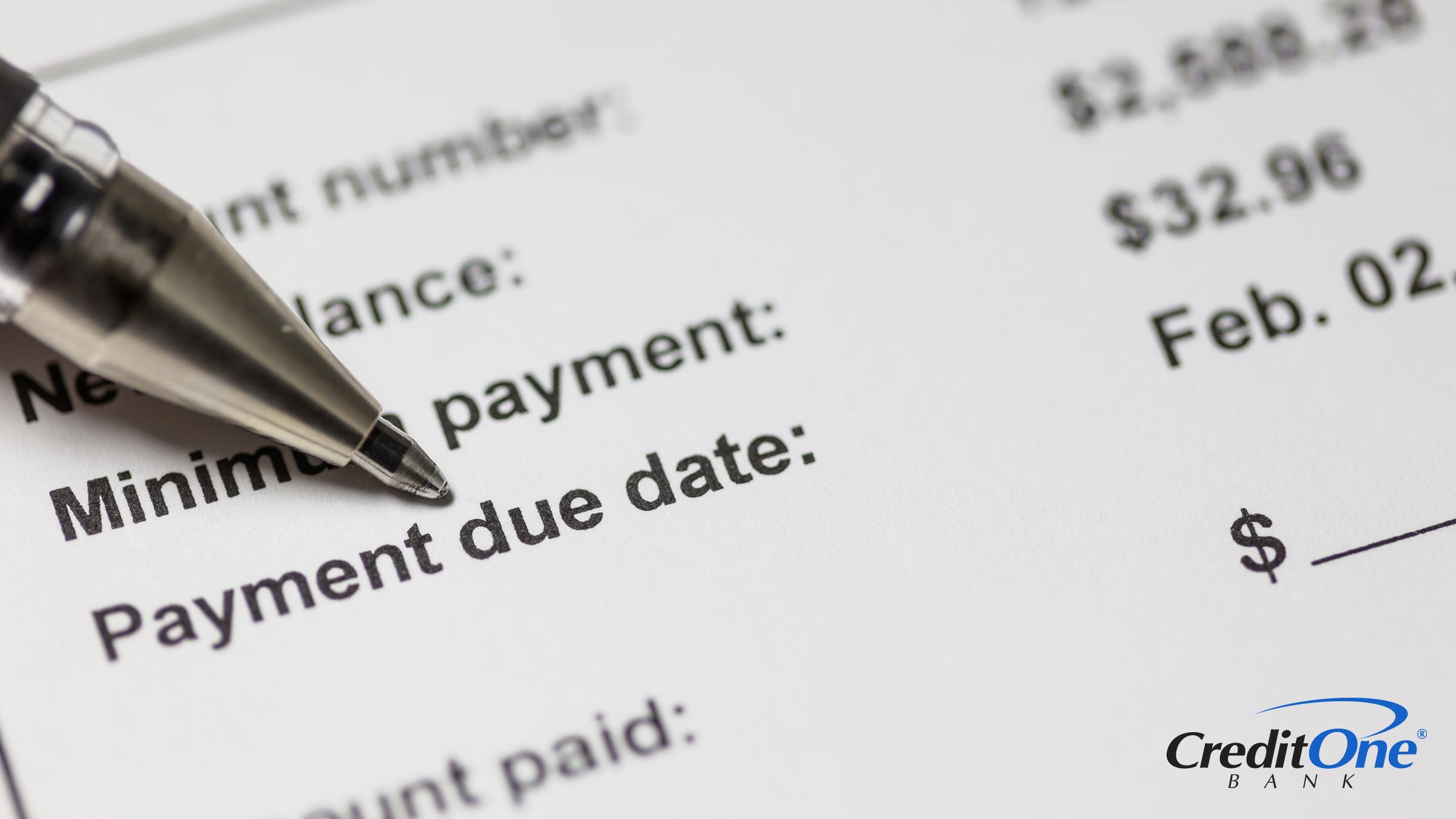
Minimum payment is the lowest amount of money you can pay each month to keep your credit card account in good standing.
Your payment is typically due on the same day each month, whether you pay the minimum, full balance, or something in between. But if you want to be safe, making your payment before the due date is a good practice. You can also consider setting up AutoPay for at least the minimum due.
Now, here’s the general journey your credit card account takes each month.
A billing cycle, also known as a billing period, is the length of time from one payment due date to the next. Credit cards typically have monthly billing cycles lasting 28 to 31 days, depending on how many days are in the month. That lets the due date stay consistent from month to month.
So, if your credit card due date is the 20th of every month, the billing cycle would be from the 21st of one month through the 20th of the following month. All purchases made with the card — plus any fees, interest, or other transactions — during that time period should appear on that billing cycle’s statement.
Using the same closing date example, let’s say you made $300 in purchases between April 21 and May 20. Your credit card statement for that billing cycle should include those purchases, plus any interest or fees accrued during that time period. So you’ll see your exact balance as of the billing cycle closing date, and the minimum payment due.
If you activate a brand-new credit card that doesn’t have a balance on it yet, and you don’t make any purchases or transactions with it during the first billing cycle, your balance at the end of the billing cycle should be $0 — unless the card has an annual fee (including an annual fee billed monthly) or other fees billed during that first cycle. If you spent $300 on that card during the first billing cycle, your balance would be $300 plus any applicable fees or interest.
Once your billing cycle ends, the credit card issuer generates the statement, or bill. Before making a payment, you’ll want to check the statement balance, due date, and minimum payment due. The statement will also reiterate your acceptable payments methods, like check, electronic withdrawal, or debit card. You normally can’t use one credit card to pay another.
You legally have at least 21 days from the time a credit card statement is “mailed or delivered” to make your payment, according to the Credit Card Accountability Responsibility and Disclosure Act (Credit CARD Act) of 2009.
If you agree to receive electronic statements, many credit card issuers make them available on the billing cycle closing date — also known as the statement closing date — so that’s typically the official delivery date. That means if your billing cycle closes on the 20th of the month and your statement is made available that same day, the law gives you at least 21 calendar days from that date to get your payment in. However, some creditors offer more than the minimum — so it may be 24 days or 25 days, for example.
Of course, your payment due date will be clearly listed on the statement so you don’t need to guess or count days. If your normal due date falls on a Sunday or holiday, you’ll generally get another day before it’s considered late. But it’s important to mention that the payment due date is when the creditor needs to receive the payment, not the date you need to send it by.
The easiest payment method is usually electronic, and even if the payment takes a few days to post, you’ll generally get credited for the payment as of the day you submitted it. So if your due date is the 15th of the month and you make a payment on the 15th at noon, that should count as “on time” — even if the payment doesn’t show up in your account until the 18th.
However, if you choose to mail a payment, you’ll want to do it early enough for it to reach its destination before the due date. And regardless of payment method, make sure you have enough money in your bank account to cover the payment. If it bounces on the due date, it won’t be considered on time.
Another situation that doesn’t count as an on-time payment is making a payment before the due date, but for less than the minimum amount due — unless you make more than one payment before the due date, and they collectively add up to the minimum (or more). Either way, you need to make at least the minimum payment as specified on your statement.
But even though making just your minimum payments will keep your account in good standing, it’s going to take you longer to pay off your credit card’s balance. And by the time you do, you’ll have paid a lot more in interest than if you’d made larger payments.
In fact, the CARD Act requires card issuers to provide a “minimum payment warning” on every statement that tells you how long it will take you to pay off your current balance, as well as how much interest you’ll end up paying, if you continue to make only the minimum payment due each month.
If your credit card has a grace period, and your billing cycle started with a $0 balance, and you pay the balance owed for all purchases made during that billing cycle on time, those purchases can essentially be interest-free. If your card doesn’t have a grace period, you’ll still pay interest on them — but less than you would by carrying a balance from one billing cycle into the next.
Consistency is key in making credit card payments. If you make payments of at least the minimum amount due on time, every time, that could go a long way toward helping you build a positive payment history. And that typically plays a significant role in calculating your credit scores.
On the other hand, if you’re consistently late with your credit card payments, or pay less than the minimum amount due, that can establish a negative payment history — which could hurt instead of help your credit scores. After 30 days, a late payment is often considered missed, and a single missed payment could stay in your credit reports for up to seven years.
So, perhaps the most important thing to know about credit card payments is that consistently making them on time and for the right amount is a solid strategy.
The two major credit-scoring companies are FICO and VantageScore. Each one uses slightly different scoring models, but they both take similar factors into account.
The specifics may vary, but here’s a general snapshot of how these factors align with credit card usage.
Payment history: Making on-time payments every month can boost your credit score. On the flip side, missing payments could have a negative impact.
Utilization and debt: Your credit utilization ratio is the portion of your credit limits you’re currently using, and keeping that ratio lower — like under 30% — typically leads to a higher credit score. Your total debt overall is also logged, with high debt levels being a potential red flag.
Credit history and average age: A positive credit history has a positive effect, and the longer that history, the better your score may be. Another important piece is the average age of your accounts, which considers how long your current credit accounts have been open.
Credit mix: Having a healthy credit mix means managing different types of credit well, which may help boost your credit scores. Your mix includes revolving credit, like credit cards, and installment credit, like loans.
New credit: Applying for new credit typically results in a hard inquiry on your credit report, and these are factored in to your score — as well as how many new cards you actually received. Too many applications or recently opened accounts can imply that you’re desperate for credit.
After your billing cycle ends, your credit card issuer creates a new statement. They will then mail the statement to you or make it available in your account. You’ll have 21 days or more from that date to make your credit card payment (at least the minimum due) and have it considered on time.
Your minimum payment is the smallest amount you can pay by the credit card due date and still have the account remain in good standing. Your creditor calculates the minimum payment and lists it clearly on your statement. It may be based on a percentage of your balance or a flat rate.
If your payment is received by 5:00 p.m. on the due date, in the time zone stated on the bill, it should be considered on time. For electronic payments, that typically means the time you submitted the payment, even if it takes a few days to post — but mailed payments have to be received by the creditor before that time.
The amount of time it takes for your credit card payment to process and post to your account depends on several factors, including how you pay, when you pay, your credit card issuer, and your bank. So the best way to know when a credit card payment will be posted is to contact your creditor and ask.
But generally speaking, making an electronic payment online or through your mobile app should process quicker — typically in one to three business days — than if you send a check through the mail. And electronic payments will usually reflect the date you submitted the payment rather than the date it finally posts.
If you’re looking to cancel a scheduled credit card payment or stop a pending payment — like if you accidentally paid the full amount when you wanted to pay less — call the number on the back of your card and talk to a customer service agent about what can be done.
If they agree to make a change, be sure to take good notes, including the agent’s name and a confirmation number. Then verify later to make sure the payment was indeed canceled or adjusted.
If your issue is with a purchase needing to be disputed, you’ll want to start by contacting the merchant. They might help you resolve the issue, including potentially refunding the purchase back to your card. If that doesn’t work, you can contact your card issuer, dispute the charge, and request a chargeback.
But a pending refund doesn’t mean you don’t need to pay the credit card bill. You may end up with a negative balance after the refund, but you still need to pay at least the minimum due.
When you make payments, it opens up available credit. And when you make purchases, that available credit is used. So each payment could lower your credit utilization ratio and result in more available credit, and paying more than you spend will have a bigger effect.
Whether you have one credit card or several, paying on time is one of the most important habits to cultivate. And understanding how credit card payments work can be helpful in staying on track.
If you’d like to build or rebuild a positive credit history with a credit card, a good rule of thumb is to see if you pre-qualify first. It generally only takes a few minutes and doesn’t harm your credit score.

About the author:
Heather ValeHeather is an accomplished writer and editor in the financial and business industries, with expertise in credit building, investments, cryptocurrency, entrepreneurship, and thought leadership. She loves investigating and pulling apart complicated topics to make them simple, engaging, and easy to understand. But she also enjoys writing about the personal side of life, including self-help, creativity, relationships, families, and pets. She approaches everything from a yin-yang perspective, so her passion for wordplay and metaphors is always balanced with an intense focus on accuracy. Heather has a BFA in Visual Arts from York University, and has worked as a journalist in all media: TV, radio, print, and online.
Mon Nov 17 2025
Many people confuse their credit card statement closing dates with their payment due dates, but it’s important to know the difference between the two.

Wed Jul 09 2025
A late credit card payment can cause frustration and bring consequences. Let’s explore the potential fees, interest rate increases, and other effects of being late.

Thu Jun 25 2026
Ever wondered how your monthly minimum credit card payment is determined? Find out how it’s calculated, what factors can impact your minimum payment, and more.